
The familiar pressed pallet, now made from elephant grass
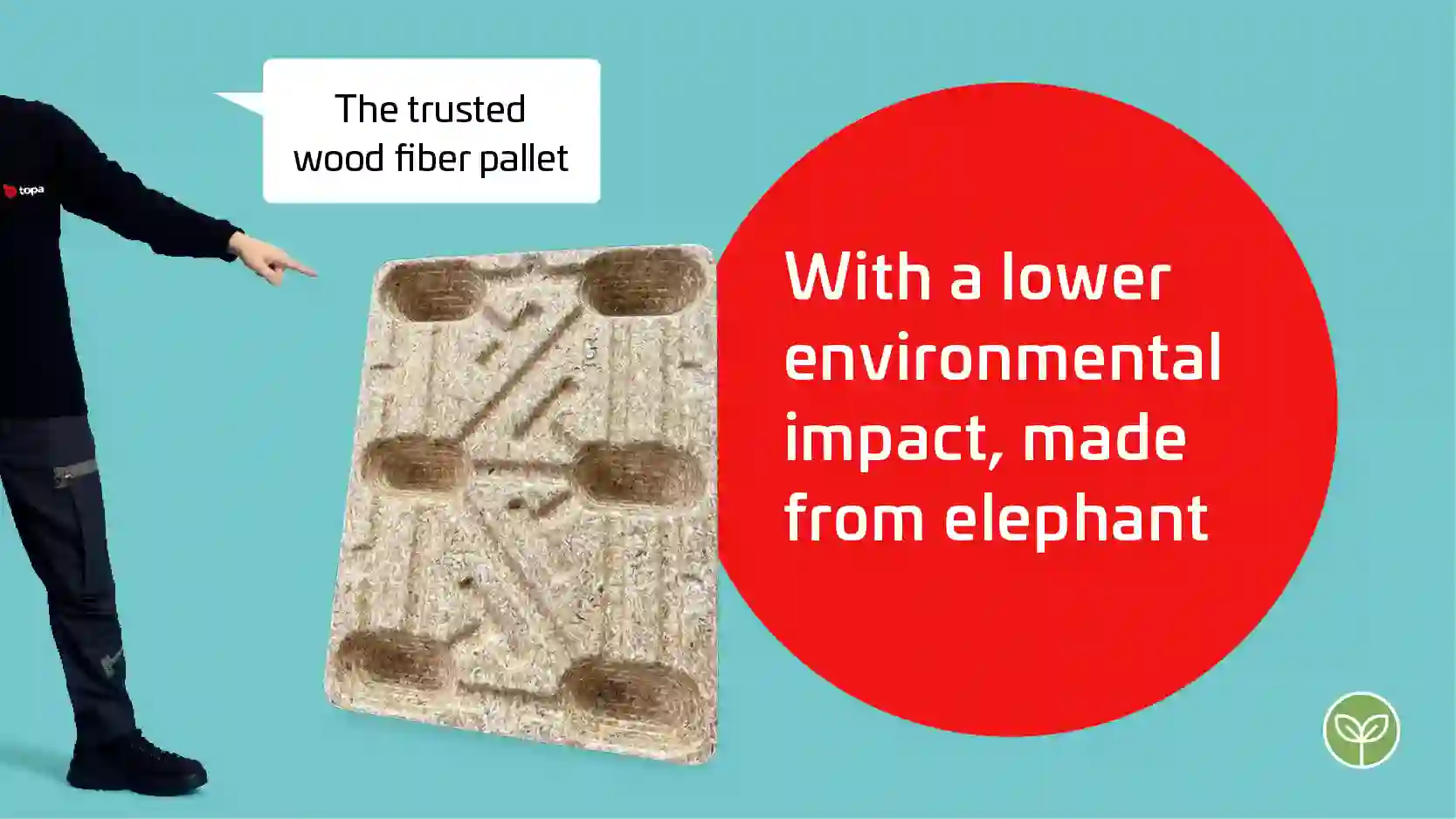
You know the classic pressed pallet as a reliable workhorse: lightweight, nestable, splinter-free and practical in storage and transport. Those benefits remain unchanged, but the base of the pallet has been renewed. Alongside the familiar wood fibre version, there is now a variant made from elephant grass, also known as Miscanthus.
This pallet is wood-free and made from a fast-growing, bio-based raw material. That makes it an interesting alternative for companies looking to keep their logistics processes efficient while being more mindful of material use.
No compromise on quality
For your logistics process, very little changes. The elephant grass pallet has the familiar characteristics of a pressed pallet: it is lightweight, dimensionally stable, nestable, splinter-free and low in dust. This makes it easy to handle and suitable for a wide range of logistics applications.
The pallet is robustly constructed, reusable up to 10 times and available in various sizes. Thanks to its consistent dimensions, it integrates well into standardised processes. The difference therefore lies not in additional handling, but primarily in the raw material and its impact.
Wood-free and practical for export
A key advantage of the elephant grass pallet is that it is wood-free. As a result, the pallet is naturally free from wood-borne pests. In principle, no IPPC marking or ISPM 15 treatment is required, as it is not solid wood packaging material.
This makes the pallet particularly suitable for export flows where companies want to minimise complications related to packaging wood. However, always check the current import requirements of the destination country for international shipments.
Why elephant grass is a logical step
No industrial product is entirely without impact. But by choosing elephant grass, you opt for a raw material that is clearly different from wood. Miscanthus is a perennial crop that grows quickly and can be harvested annually. The fibres are processed into a strong, pressed pallet using a formaldehyde-free binder.
The advantages briefly:
- Fast-growing raw material
Elephant grass grows quickly and can be harvested every year, offering an alternative to traditional wood sources. - Lower emissions
Compared to traditional pressed pallets, emissions can be up to 40% lower. This makes the pallet an attractive option for companies critically evaluating their packaging and transport choices. - Lightweight and nestable
The pallets are lighter than many nailed pallets and, thanks to their nestable design, take up less space. This supports efficiency in storage, handling and transport. - Wood-free, splinter-free and low dust
Because the pallet contains no wood, it is free from wood-borne pests. Its splinter-free and low-dust finish also reduces the risk of product damage or contamination. - Recyclable at end of life
At the end of its use phase, the pallet is recyclable, depending on local processing options. This makes it a good fit within a broader move towards smarter material use.
Honest and given a new look
Let’s not overstate it: a pallet remains a functional product. But by choosing elephant grass, you choose a strong, practical carrier with a lower impact than traditional pressed pallets.
So it’s not simply a wood fibre pallet in a new guise, but a wood-free alternative with familiar performance. Lightweight, strong, nestable and ready for a wide range of logistics applications.
Would you like to explore whether elephant grass pallets align with your goals today?
Our specialists are happy to think along with you.
Get in touch with us.
You pack it with Topa.
Topa
Contact