
Nobi customer case: A lamp that protects, packaging that pays off
How a new packaging concept helped Nobi improve its margins
What if a lamp could do more than simply provide light? At Nobi, it helps older people live safely, independently and with greater freedom for longer. The company’s smart lamps detect falls, provide preventive lighting when someone gets out of bed at night, and alert carers when assistance is needed. The idea was born from a problem far greater than many people realise: not the fall itself, but the consequences of remaining on the floor for too long afterwards.
Today, Nobi’s lamps are protecting people in hundreds of care facilities across the United Kingdom, the United States, Belgium and other European countries. But while the advanced technology was conquering international markets, logistics proved to be an early bottleneck. When packaging is treated as an afterthought, the costs quickly become apparent. During the development of its second-generation product, Nobi completely changed its approach. Packaging moved to the very start of the business case, with a clear objective: reduce volume, provide the right level of protection and maximise efficiency throughout the global supply chain. That is when Topa joined the project.
Technology that helps people flourish
The name Nobi is derived from a Japanese word meaning to flourish. Co-founder Bert explains:
“We want to ensure that people can remain healthy, happy and, above all, free, even when life isn’t ideal.”
The lamps are deliberately designed to blend seamlessly into the living environment, without looking like medical equipment. But to fulfil that promise worldwide, the product first has to arrive safely. A delicate product demands a robust logistics strategy.
A shift in perspective: from cost centre to logistics driver
With its first-generation packaging, Nobi experienced the harsh reality of conventional packaging. It occupied too much valuable warehouse space and, more importantly, failed where it mattered most: protecting the product during transport. Bert remembers the frustration:
“You could throw one of those boxes out of a first or second-floor window. The box would reach the ground intact, but the product inside would be completely broken apart.”
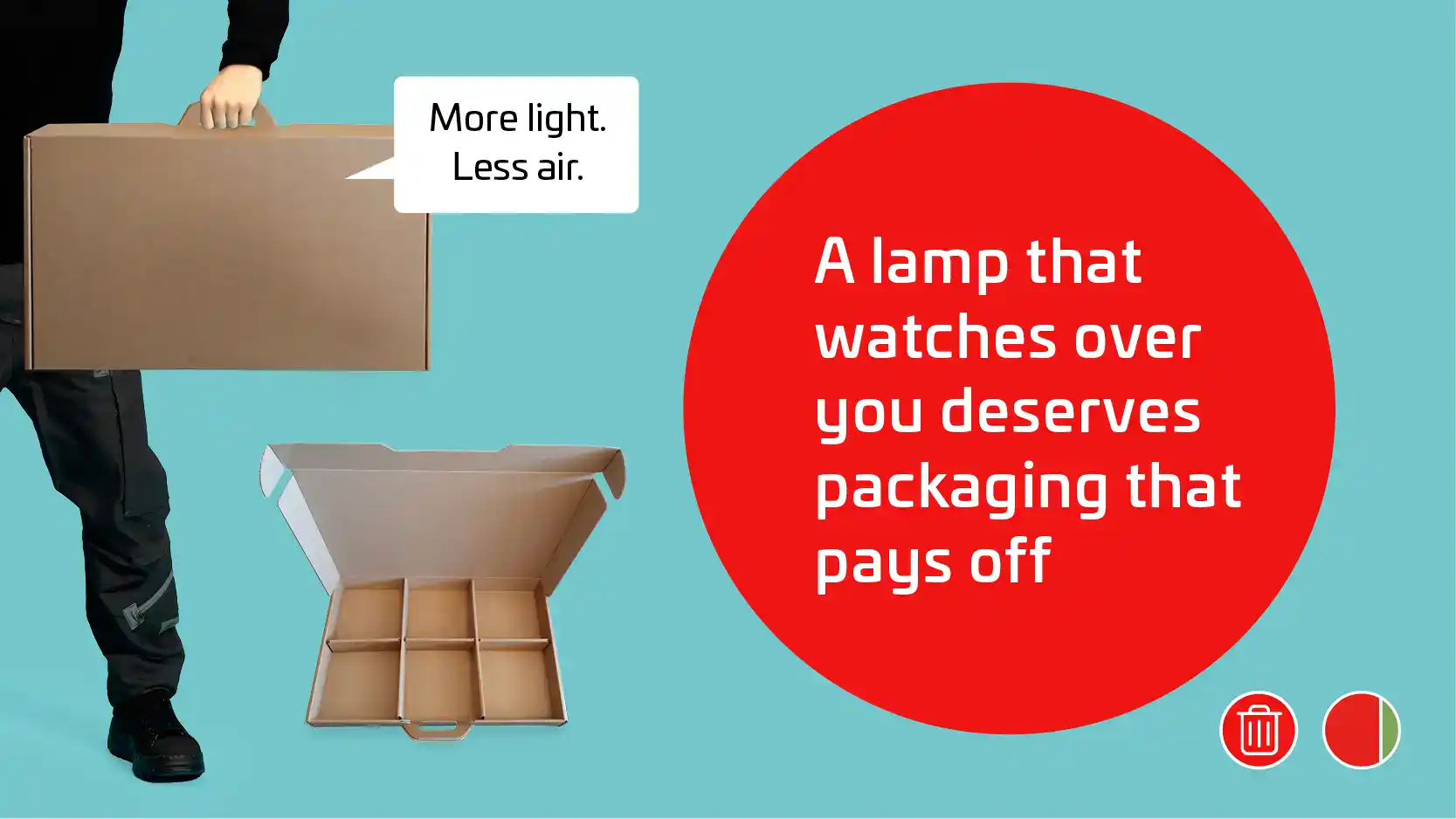
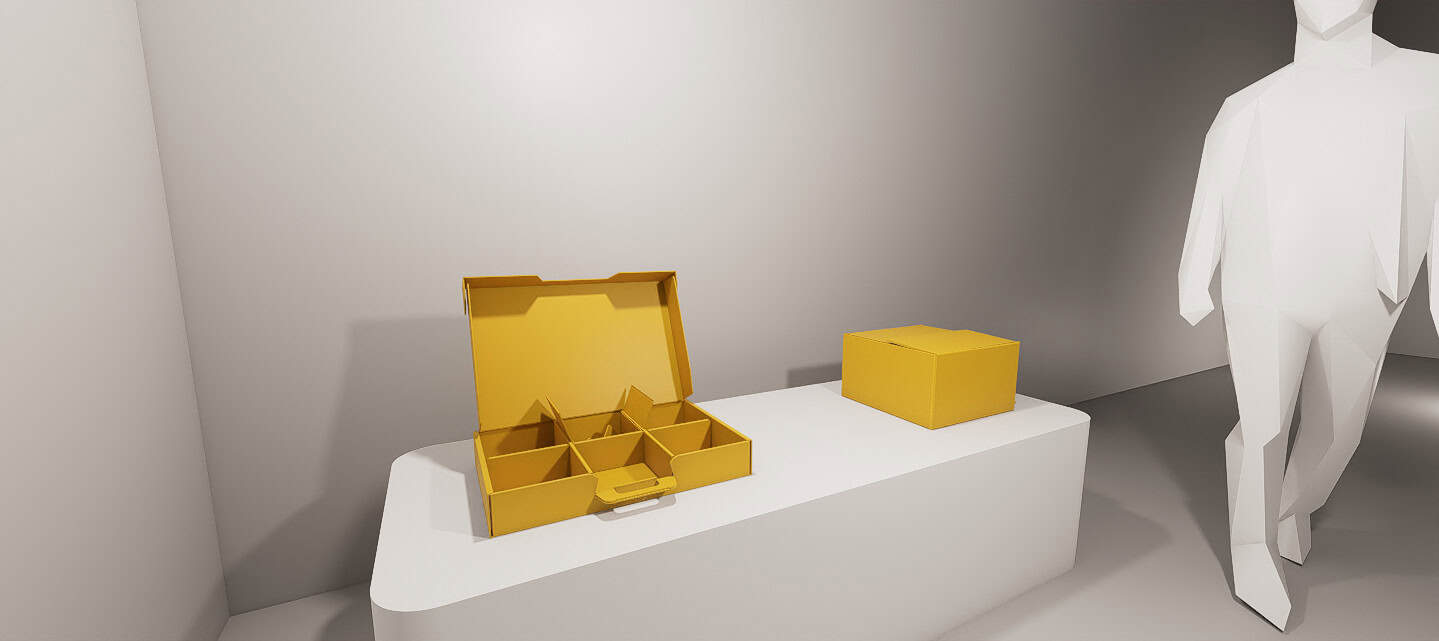
That was the turning point. Packaging was no longer seen as something you buy afterwards; it became a key driver of operational performance. Working closely with Topa, an entirely new packaging concept was developed. Both the large and small lamps received new outer cartons and dedicated power supply packaging. A specially designed technician’s case was also created, allowing installers to neatly carry six power supply units during service visits.
The thinking was ambitious. The packaging needed to stack perfectly on pallets while also fitting seamlessly into the installation process. Logistics became such a determining factor that Nobi even decided to adapt the product itself to achieve the ideal pallet configuration.
“Fortunately, we did, because we can now fit more boxes onto each pallet, and they fit perfectly.”
Transporting less air immediately translates into lower transport costs across the global supply chain. In other words, the packaging pays for itself.
Co-creation as the driving force
The key to this success lay in the way both companies worked together. While traditional suppliers simply present catalogue products, Nobi and Topa developed the solution side by side.
“The difference between Topa and our previous supplier was that we genuinely developed everything together. Co-creation, to use the modern term. That’s exactly what it felt like.”
Nobi defined the functional requirements, while Topa’s engineers rapidly translated them into working prototypes. Thanks to the facilities at the Topa Institute, ideas quickly became tangible.
“Saying you can do something is one thing. Actually proving it by taking a prototype out of your case is something entirely different.”
Inside the test centre, real-life transport conditions were recreated. Packaging construction, print quality, pallet configuration and product protection were all subjected to realistic testing until the optimum balance was achieved. Even as requirements evolved throughout the project, the collaboration remained smooth.
“It never felt like a battle of attrition.”
Packaging with social value
The benefits extend well beyond logistics. The understated brown carton, printed elegantly in white and green, perfectly reflects Nobi’s brand identity. It is quick for installers to open and free from unnecessary, environmentally burdensome materials.
Together with design agency Blackbirds, the cardboard itself was given a second life. The packaging features illustrations that residents of care homes can colour in and reuse. Nobi intends to build future creative initiatives around this idea.
“Everyone who works here, and everyone who founded this company, has the wellbeing of older people at heart. We are a commercial business, but we’re not just any commercial business.”
The packaging is transformed from waste into a moment of connection, allowing residents to create something meaningful for their children or grandchildren.
A seamless journey towards better margins
The results speak for themselves. The new packaging significantly reduces warehouse space requirements while ensuring damage-free international distribution. The first thousand systems are now being shipped worldwide, and the market response has been overwhelmingly positive.
Looking back on the project, Bert reflects on how packaging has become a genuine strategic asset:
“I’d say it was a flawless journey.”
With a smile, he adds:
“The only downside is that we don’t need any more boxes right now, otherwise we’d happily start another project with you tomorrow.”
How does your organisation view packaging?
Are your margins disappearing at the end of the supply chain, or are you building efficiency into your operations from the very beginning? Contact Topa to discover where your logistics process could deliver greater value.
Topa
Contact